
A stiff back on the drive to work, a shoulder that aches when you reach or a knee that complains on the stairs can wear you down. At our Epping clinic, a physiotherapist assesses your pain, explains what they find and, if physiotherapy is suitable for you, works out a practical plan with you around the things you want to get back to.
Musculoskeletal physiotherapy looks after the muscles, joints, tendons, ligaments and nerves that help you move. Whether your pain started suddenly or has built up over months, a physiotherapist can assess it and talk you through your options.
If you have new numbness around your groin or buttocks, new trouble controlling your bladder or bowel, or new weakness in your legs, call 000 or go to your nearest emergency department straight away. See your GP promptly if your pain comes with a fever, unexplained weight loss or feeling very unwell.
People often come to us with:
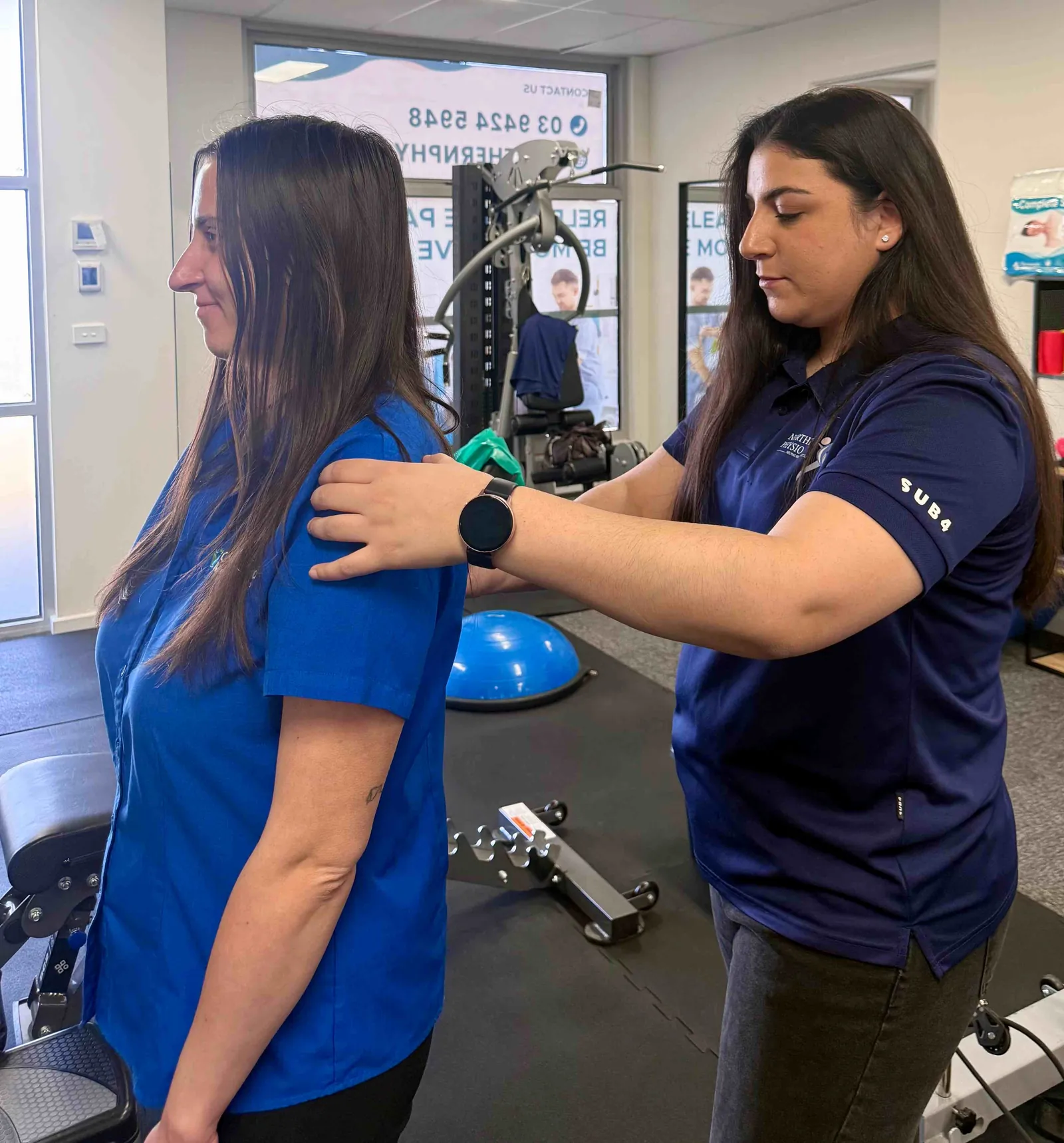
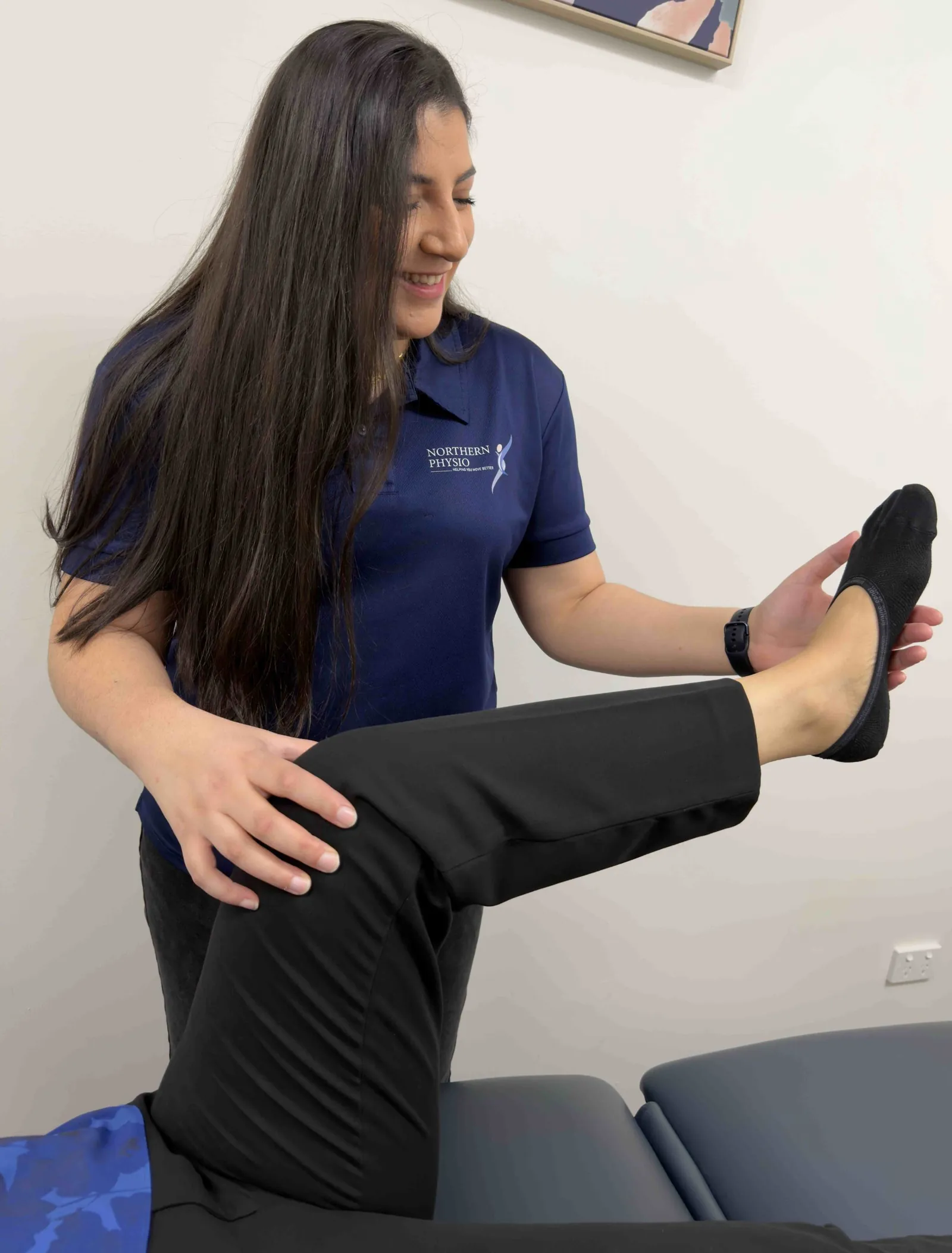
Your first appointment starts with a full assessment. Your physiotherapist asks how the pain started, what makes it better or worse and what you need to get back to, whether that is lifting at work, playing with your kids or finishing a fun run. They then check how you move, your strength and flexibility, and explain what they found in plain language.
If physiotherapy is suitable for you, your plan is matched to your goals and may combine:
Pain does not only show up on the sports field. We see tradespeople and warehouse workers with lifting injuries, office workers with neck and back pain, older adults who want to feel steadier on their feet and parents with sore wrists from carrying little ones. If physiotherapy is suitable for you, your plan is built around the movements your day actually asks of you.
If you were injured at work or in a transport accident, we also provide WorkSafe and TAC physiotherapy and work with your case manager on the paperwork. Bring your claim number to your first visit.
Principal Physiotherapist and Founder
Jas sees clients for muscle and joint problems and also provides our pelvic health appointments. She holds a Bachelor of Physiotherapy, completed in India, a Graduate Diploma of Health Promotion and a Master of Health and Human Services Management from Deakin University, and a Graduate Certificate in Pelvic Floor Physiotherapy from the University of Melbourne.
Senior Physiotherapist
Priya holds a Postgraduate Diploma in Rehabilitation Studies and has an interest in acute and persistent musculoskeletal conditions, including sporting, workplace and post-surgical injuries and chronic pain. Her approach is holistic and centred on each person’s goals.
Physiotherapist
Roukiah completed a Master of Physiotherapy Practice at La Trobe University. Her interests include lower back, shoulder and elbow pain, bursitis, hip and knee rehabilitation after surgery, strength and conditioning and falls prevention.
You can read more about the team on our Northern Physio team and story page.
Our main clinic is at Suite 2, 62A Manor House Drive, Epping, with free on-site parking, wheelchair access and a bus stop about 10 metres away at O’Herns Road and Manor House Drive. Many of our clients come from Lalor, Mill Park, South Morang, Wollert, Craigieburn, Mickleham, Kalkallo and Donnybrook.
Musculoskeletal appointments are available at all four of our clinics, including our consulting rooms at 878 Edgars Road in Epping, 784 Plenty Road in South Morang and 4/1540 Pascoe Vale Road in Coolaroo. See all of our physio clinic locations in Melbourne’s north for the other consulting rooms.
| Monday | 9am to 6:30pm |
| Tuesday | 9am to 5pm |
| Wednesday | 9am to 7:30pm |
| Thursday | 9am to 5pm |
| Friday | 9am to 5pm |
| Saturday | 10am to 2pm |
You do not need a referral to see a physiotherapist privately, and you can book online at a time that suits you. If you would like to claim a Medicare rebate for some sessions, you need a GP Chronic Condition Management Plan and a referral from your usual GP (or the practice where you are registered through MyMedicare), who decides whether you are eligible.
If your extras cover includes physiotherapy, you can also claim on the day with your private health insurance. The rebate depends on your fund and level of cover, so check with your fund first. You cannot claim a Medicare rebate and a private health rebate for the same session. The new patient information page explains what to bring to your first appointment.
Wear comfortable clothes you can move in and that let your physiotherapist see the sore area, such as shorts for a knee or hip problem or a singlet for a shoulder. You may be asked to do some exercises, so runners are a good idea.
It depends on the problem, how long you have had it and what you want to get back to. If your physiotherapist recommends more than one session, they will give you an idea of how many at your first appointment and review this as you go, and much of the work happens through the exercises you do at home.
Usually not. Most muscle and joint problems can be assessed without a scan. If your physiotherapist thinks an X-ray, ultrasound or MRI would help, or that you should see your GP, they will explain why. Bring any scans or reports you already have.
Yes, where possible. When you book online you can choose your physiotherapist, and seeing the same person helps keep your plan consistent.
Book online at a time that suits you, or call 03 9424 5948. Not sure which service is right for you? Contact us and we will help.